The Great Grid Buildout
How AI, electrification, storage, transmission, substations, and the people who build them are rebuilding the American power system — all at once.
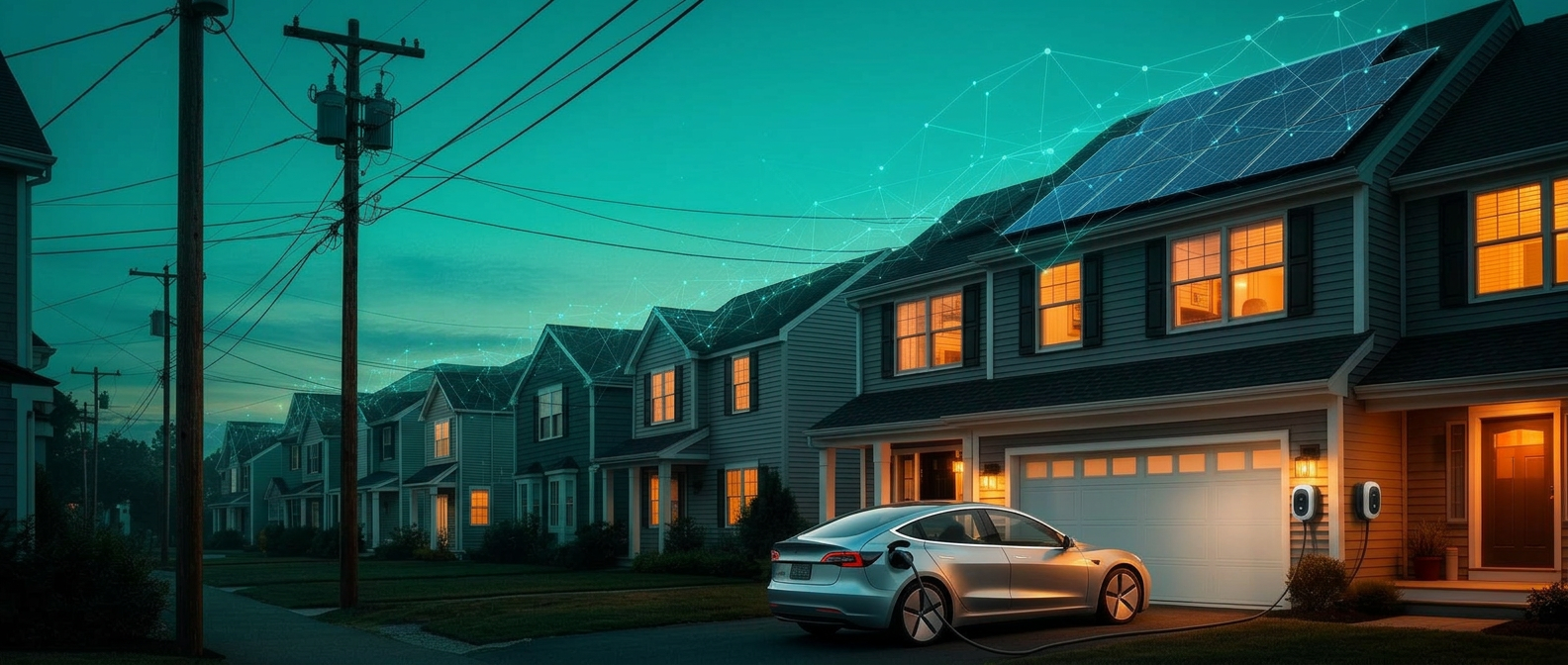
On any given weekday in America right now, somewhere a utility crew is de-energizing a residential transformer to swap a 50 kVA can for a 75, because a cul-de-sac that used to draw a few kilowatts now has four EVs and three heat pumps on the same secondary. A few counties over, a contractor is setting the first of three new transformer banks at a substation that broke ground eighteen months ago and still has a year to go. On the interstate, a flatbed is hauling a single large power transformer that was ordered in 2023 and is finally arriving — late, expensive, and already spoken for.
None of this makes the news. There is no ribbon-cutting for a reconductored feeder. No press release when a 230 kV breaker is finally energized after a two-year procurement saga. The work is happening in substation yards behind chain-link fence, in manholes under city streets, in switchyards at the edge of data center campuses, and on transmission right-of-way that crosses three counties and four jurisdictions. It is the largest electrical construction effort the country has undertaken in two generations, and most people will never see a square foot of it.
This is the central fact that the public conversation about energy keeps missing. The energy transition is usually described as something that will happen — a set of targets, a policy debate, a forecast. But for the contractors pulling cable, the EPCs scheduling crews, the utilities filing capital plans measured in tens of billions of dollars, and the developers waiting in interconnection queues, it is not a future trend. It is a construction project already underway, behind schedule, over budget, and short on people — and it is accelerating.
The United States is in the early stages of the largest electric infrastructure buildout in generations. Not since the rural electrification programs of the 1930s, or the postwar expansion of the high-voltage transmission backbone, has so much of the power system been planned, financed, and built simultaneously. Unlike those earlier expansions, driven by a single imperative, this one is pulled forward by a convergence of demands that share no common origin and no coordinating hand.
Artificial intelligence data centers requesting interconnection at scales utilities have never served. Millions of electric vehicles arriving on distribution circuits one driveway at a time. Heat pumps replacing gas furnaces and quietly rewriting winter peak. Factories reshoring and demanding industrial power that local feeders were never sized for. Battery storage taking on roles thermal generation held for a century. Renewable generation stranded behind transmission that does not yet exist. And underneath all of it, a utility industry that spent two decades planning around flat demand and must now rebuild its capital programs, its supply chains, and its workforce in real time.
This article is a report from inside that buildout — a systematic account of what is being planned, financed, engineered, and physically built today, and the constraints that are shaping how and when it gets completed. It is not a story about a single technology. It is the story of an entire infrastructure system being rebuilt while it remains in continuous operation, by an industry and a workforce that are discovering the limits of how fast that can be done.
01 — The End of the Flat Demand Era
To understand why the current moment is so consequential, it helps to understand what preceded it. From roughly 2007 to 2020, total U.S. electricity consumption was essentially flat. The economy grew. The population grew. But electricity demand grew almost imperceptibly, because efficiency gains across every major consumption category — lighting, appliances, industrial motors, data centers — absorbed economic expansion without requiring proportional increases in generation or delivery infrastructure.
This shaped a generation of utility planning in ways that are now creating real operational friction. Utilities built rate structures, capital programs, workforce strategies, and planning methodologies around the assumption that demand growth would remain slow, predictable, and distributed across many small loads rather than concentrated in a few large ones. Integrated resource plans — the documents through which utilities lay out their generation and infrastructure strategies over ten and twenty-year horizons — were calibrated to this environment. Conservative load forecasts. Incremental capital additions. Deferred major infrastructure investment. The system was built for modest growth and managed accordingly.
The efficiency narrative also influenced the institutional culture of the industry. In many service territories, the primary planning challenge was not how to serve more load but how to manage declining load — distributed solar reducing net demand, LED retrofits cutting commercial lighting consumption, efficient HVAC reducing residential peak draw. Engineering teams whose predecessors had planned substations around industrial growth spent their careers managing conservation voltage reduction programs and demand response dispatch. The skills, tools, and institutional reflexes developed for load management are not the same ones required to site, design, permit, and build new substation capacity as fast as developers are now demanding it. Many utilities effectively stopped doing greenfield capacity work for years at a time. The muscle atrophied.
U.S. Total Electricity Demand, 1980–2035 (actual and projected). The 2007–2022 flat era is shaded; from 2022 the series splits into baseline efficiency, moderate (EV + heat pump), and high-growth (AI + full electrification) scenarios. Source: EIA, LBNL, DOE.
That era is ending. The integrated resource plans filed by utilities in 2024 and early 2025 look nothing like those filed in 2020. Load growth projections that had been measured in fractions of a percent annually are now running at two, three, and in some territories, five percent annually. In regions with heavy data center concentration, revisions are more extreme — utilities in Virginia, Texas, Georgia, and the Pacific Northwest have revised five-year load forecasts upward by amounts that, in some cases, represent more incremental demand than they had expected to accumulate over an entire decade.
The planning frameworks themselves are under stress. Annual resource-planning cycles, designed for incremental revision, are being rewritten mid-cycle. Scenario ranges that once spanned a few hundred megawatts now span several gigawatts. Teams staffed to produce methodical long-range forecasts are working in an environment where last year's plan is already obsolete. The tools, the methods, and in some cases the people developed for the flat-demand decades are being retooled in real time for conditions they were never built to handle.
No single force broke the calm. But one arrived faster, and hit harder, than the rest.
02 — The AI Shock
Of all the forces reshaping the demand picture, artificial intelligence is the most sudden, the most concentrated, and the most difficult to forecast with confidence. It arrived in utility planning conversations not gradually but as a series of increasingly large announcements — campuses drawing 100, 200, 500 megawatts; hyperscaler portfolios representing multiple gigawatts of new load in single service territories; state economic development agencies announcing investments measured in billions of dollars and hundreds of megawatts in the same press release.
The electricity demand of AI compute is structurally different from prior waves of data center expansion. The data center industry grew substantially through the 2010s, but its load growth was diffuse — many medium-sized facilities distributed across metro areas, each adding incremental load that utilities could manage within existing capacity frameworks. AI training and inference workloads are different in their concentration. A single large language model training cluster may require 50 to 150 megawatts of continuous power at a single substation. A hyperscale campus housing multiple clusters and the associated cooling, power conditioning, and support infrastructure can draw 500 megawatts or more — the equivalent of adding a substantial industrial city to a utility's service territory at a single interconnection point.
The geographic concentration is particularly challenging for utility planning. Data center developers choose sites based on land availability, fiber routes, climate for cooling, and increasingly, power availability. The result is that specific grid regions — Northern Virginia, central Texas, the Phoenix metro area, parts of the Southeast and Midwest — are absorbing the majority of this load growth. The Northern Virginia load pocket has been adding gigawatts of new load on timescales that have required extraordinary capital commitment and, in some cases, emergency transmission and generation procurement to keep pace.
For the engineers and project managers at utilities serving these markets, the practical reality of this pressure shows up in specific ways. Nearly every large data center inquiry begins, in engineering terms, as a request the utility cannot immediately satisfy: a load that requires a new substation or a major expansion of an existing one, transmission service that triggers an interconnection study, and a transformer order with a lead time that does not fit the developer's construction schedule. The conversation between a hyperscaler's site team and a utility's transmission planning department has become a negotiation over physics and procurement calendars as much as over rates.
The forecasting challenge is compounded by the gap between announced projects and those that ultimately reach commercial operation. Utilities that build full capacity against peak announced demand and watch those projections evaporate face stranded costs that regulators and ratepayers must absorb. Utilities that decline to build ahead of announced demand face reliability violations when the load arrives anyway. Neither path is clearly right, which is why how aggressively to build ahead of data centers has become one of the defining judgment calls for utility leadership in affected territories.
If AI is the shock — concentrated, sudden, impossible to miss — the next force is its opposite. It arrives quietly, one driveway and one furnace at a time, and in aggregate it may reshape the system even more profoundly.
03 — Electrification Arrives
AI takes the headlines. Electrification will do the deeper work. Where compute demand concentrates in a handful of campuses, electrification spreads everywhere at once — a steady, grinding expansion of electricity's share of the energy a household or a factory consumes, advancing across transportation, heating, and industry no matter what any single technology does. It does not announce itself in gigawatt press releases. It shows up as a slightly heavier draw on ten thousand distribution circuits.
EVs Land on the Secondaries
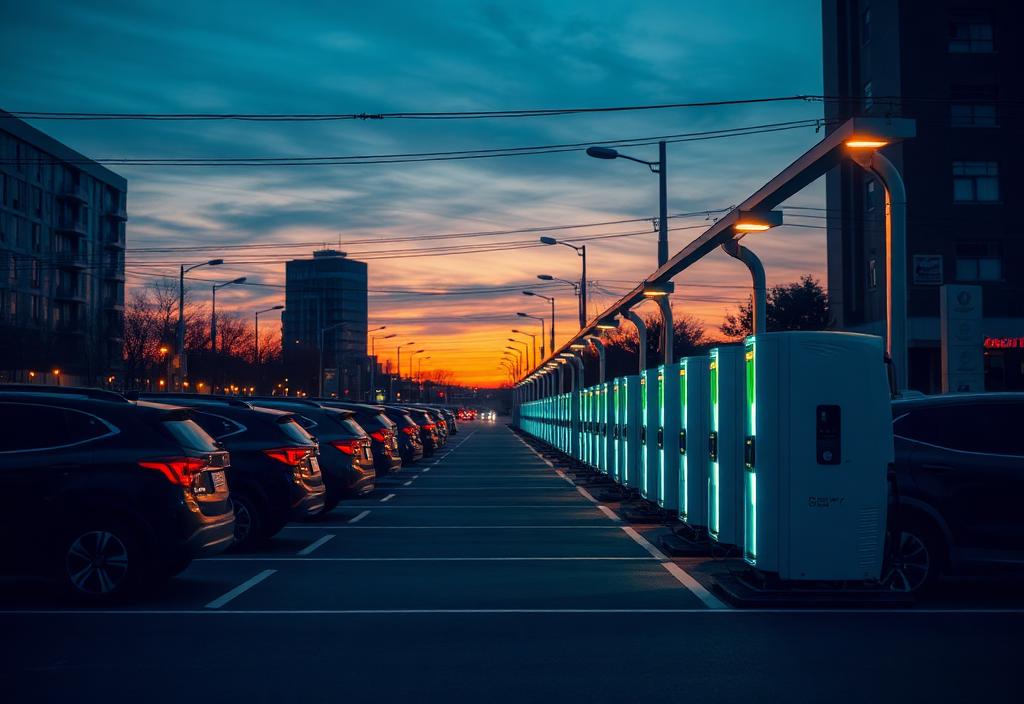
Electric vehicles are the most visible component, and their effects on the network are turning concrete in ways distribution engineers have anticipated for years. A household with two EVs charging overnight may draw eight to twelve kilowatts during charging hours — comparable to adding another home's baseline demand to a circuit sized without accounting for it. Multiply that across a neighborhood, and the strain shows up not on the transmission backbone but at the transformer, the secondary conductor, and the service entrance. Distribution planners in high-adoption markets are already dealing with overloaded secondaries, tripped pole-top transformers, and voltage-sag complaints during overnight charging. The fix is not a new substation. It is thousands of individual transformer swaps, conductor upgrades, and service reconfigurations scattered across a territory and carried out by crews already fully committed.
Fleet Depots Need Megawatts
Fleet electrification carries a different load profile but often a sharper challenge. A commercial bus depot or delivery fleet electrifying all at once may need a megawatt or more of new service at a site previously served by a modest commercial account. The substation may need expansion. The medium-voltage feeder may need reconductoring. The service entrance, metering, and revenue-grade protection may have to be rebuilt from the service point back. These jobs take time, require permits, draw on the same crews and equipment needed for everything else, and routinely run into switchgear lead times the customer's schedule never anticipated.
Heat Pumps Rewrite Winter Peak
Heat pump adoption generates its own distribution challenges. An air-source heat pump replacing a gas furnace draws five to eight kilowatts during cold weather operation — potentially for hours during heating season. Unlike EV charging, which can be scheduled and shifted, space heating responds to weather and occupant behavior in ways harder to defer. A cold snap that drives simultaneous heat pump operation across thousands of homes creates a winter peak that may exceed the summer cooling peak that historically defined the system's planning criteria. Distribution systems designed around summer air conditioning peaks may not have the transformer and conductor capacity to serve coincident winter heating loads as penetration grows — a constraint visible not in annual energy terms but in demand coincidence during the hours that matter most for reliability.
AI takes the headlines. Electrification will do the deeper work — one driveway, one furnace, one fab at a time.
Industrial Loads Return
Industrial electrification is the least visible piece of the picture in public debate, yet it concentrates real demand in specific places. Semiconductor fabs, battery plants, and other advanced manufacturing sites need anywhere from tens to hundreds of megawatts. The connection looks much like data center service — dedicated feeders, substation work, sometimes new transmission — with one added wrinkle: a process line cannot tolerate the power-quality dips a standard service might shrug off, and a single sag that trips a fab can cost more than the electricity it consumes in a year.
Each of these forces — compute, vehicles, heat, industry — eventually lands in the same place. Not on the high-voltage backbone the policy conversation fixates on, but on the modest, overlooked network of wires and transformers that runs down every street in the country.
04 — The Distribution Grid Nobody Talks About
Transmission gets the headlines. Multi-billion-dollar HVDC lines, interconnection queue reform, renewable curtailment statistics — this is the language of federal energy policy and industry conferences. But for the electrician running conduit through a residential panel upgrade, the utility engineer reviewing a feeder loading study, or the building owner trying to add a 48-amp EV circuit to a 100-amp service, the bottleneck is not the transmission grid. It is the wires, transformers, and switchgear directly outside the building.
The distribution system — the network of medium-voltage feeders, pole-top and pad-mount transformers, secondary conductors, service drops, and metering equipment that connects the bulk power system to individual customers — is where most of the physical complexity of electrification actually lands. It was designed around load profiles that are changing faster than the infrastructure can be replaced. And unlike transmission projects, which are large enough to attract regulatory attention and capital markets, distribution upgrades are numerous, individually modest, and collectively enormous in their aggregate scope and cost.
The Service Upgrade No One Budgeted For
Consider the residential service upgrade. A typical American home built before 2000 has a 100- or 150-amp service panel — sufficient for the appliance load it was designed to serve. Add two EV chargers, a heat pump, a heat pump water heater, and a battery storage system, and that service entrance is no longer adequate. The upgrade path — new meter socket, new service entrance conductor, new panel, inspection, utility coordination, possible transformer upgrade on the pole or pad — involves multiple contractors, multiple permit applications, utility scheduling backlogs, and in some cases a wait for utility work the homeowner has no way to accelerate. In high-adoption markets, utilities are processing service upgrade requests at volumes they were not staffed to handle. Scheduling windows once measured in days are now measured in weeks or months.
Pole Transformers and Feeder Congestion
The pole-top transformer is the workhorse of the residential distribution system and one of its most consequential chokepoints. A standard single-phase distribution transformer serves anywhere from one to several dozen customers. Its rating — typically 25, 50, or 75 kVA for residential applications — was determined by the load it was expected to serve when installed, often decades ago. EV charging and heat pump loads can push a transformer adequately sized for conventional residential load into overload during evening charging hours or cold weather peaks. Overloaded transformers run hot, age faster, and ultimately fail — sometimes taking out the secondary circuit they serve in the process.
Utilities are well aware of this. The challenge is the sheer number of transformers involved. A mid-sized utility may have hundreds of thousands of distribution transformers across its territory. Proactively identifying which are at risk, based on current and projected electrification adoption in the neighborhoods they serve, requires load modeling at a granularity most distribution systems were not instrumented to support until recently. Remediation competes with every other demand on distribution crew capacity and is constrained by transformer supply chain lead times that have improved since the 2022–2024 crunch but remain elevated.
Distribution feeders — the medium-voltage lines, typically 4 kV to 35 kV, that carry power from the substation to the neighborhood — face their own constraint. A feeder designed to carry ten megawatts in a residential area may approach its thermal limit as EV penetration grows, without a single large customer driving the constraint. The fix — reconductoring with larger wire, upgrading the feeder breaker and protection at the substation, or splitting the feeder and adding a new substation bank — is a construction project requiring engineering, permitting, materials, and crews.
Hosting Capacity and the Visibility Problem
The deeper structural challenge on the distribution system is what engineers call hosting capacity — the amount of distributed generation and new load a given feeder or transformer can accommodate before it requires upgrades or begins causing power quality problems. Hosting capacity is not a single number; it varies by location on the feeder, by time of day, by season, and by the mix of generation and load already present. A feeder may have ample capacity to host rooftop solar at its head near the substation but none at its far end, where reverse power flow from distributed generation can push voltage outside acceptable limits.
The problem is that most utilities have historically had limited real-time visibility into what is actually happening on their distribution feeders. The bulk transmission system is heavily instrumented and monitored second by second. The distribution system, by contrast, was built to be largely passive — energy flowed out, meters were read monthly, and the utility learned about problems when customers called to report them. As rooftop solar, behind-the-meter batteries, EV chargers, and smart panels proliferate on the distribution system, the gap between what is happening on a feeder and what the utility can actually see has become a genuine operational constraint.
This points to a conclusion that the industry is only beginning to fully absorb: distribution may ultimately require more cumulative capital investment than transmission, precisely because every neighborhood participates. Transmission investment, however large per project, is concentrated in a relatively small number of high-value corridors. Distribution investment is spread across every feeder, every transformer, every service drop in the country. The transmission buildout is measured in a few hundred major projects. The distribution buildout is measured in millions of individual upgrades — and there is no corridor to skip, no neighborhood that gets left out, because electrification arrives at every address.
Transmission is where the headlines are. Distribution is where the work is — one transformer, one feeder, one service entrance at a time, in every neighborhood at once.
Trace any feeder back toward its source, though, and it arrives at a single point — a fenced yard full of expensive steel that the public understands least and the entire system depends on most.
05 — The Substation Boom
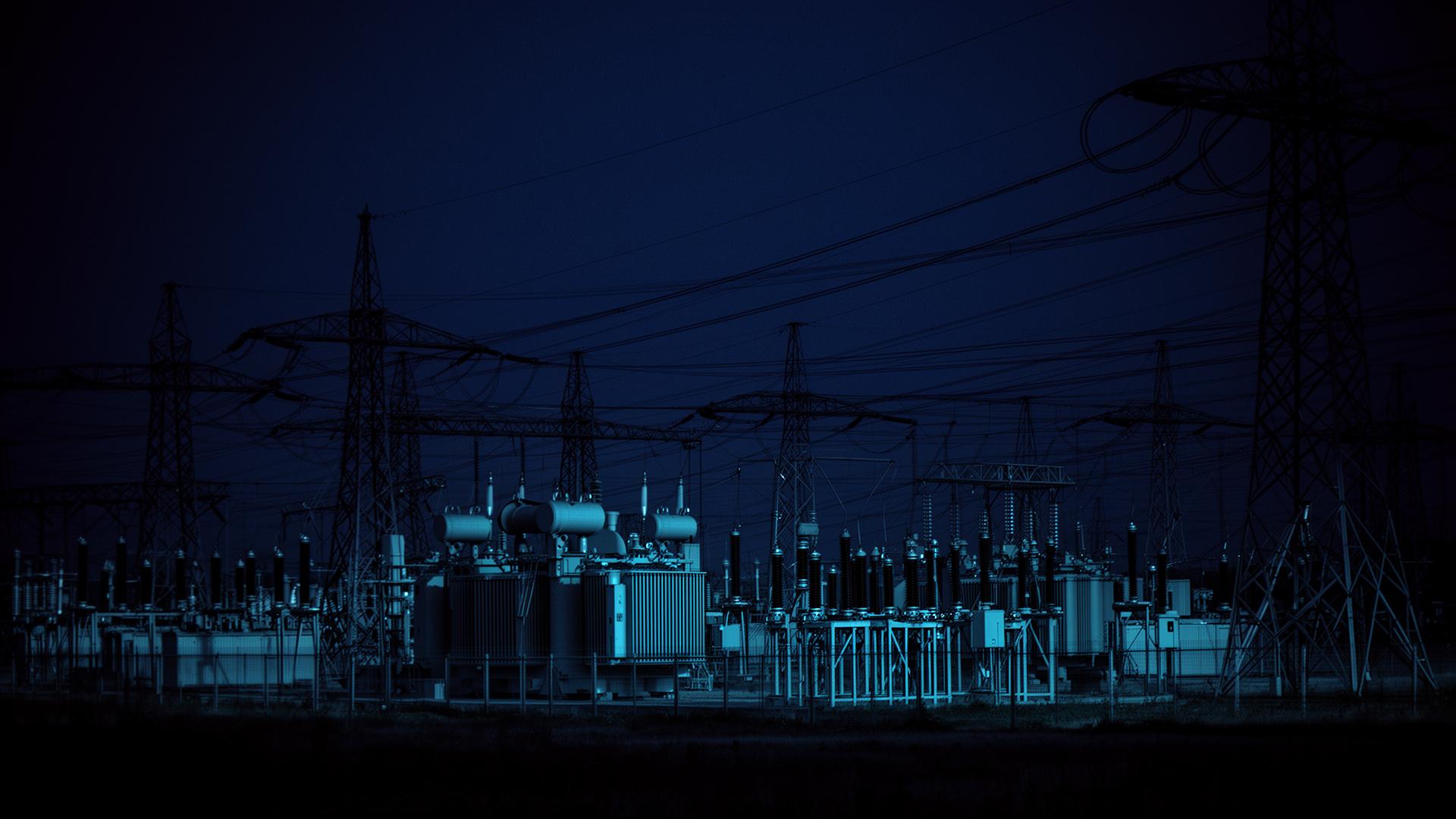
Between the transmission system and the distribution network sits that yard: the substation. It is the piece of the grid the public understands least and the buildout depends on most. Every megawatt of new demand and every megawatt of new generation passes through one. When a data center developer asks for two hundred megawatts, the answer almost always begins with a substation — a new one, or a major expansion of an existing one. When a utility maps regional growth, substations dominate the capital plan. They are the connective tissue of the system, and they have quietly become one of its tightest constraints.
A substation does a deceptively simple job: it changes voltage and routes power. Power arrives at transmission voltage — 115 kV, 230 kV, 500 kV — and must be stepped down to the sub-transmission and distribution voltages that feed neighborhoods and facilities, or stepped up from a generation source to transmission voltage for long-distance transport. Inside the fence, that job requires an array of expensive, long-lead, custom-engineered equipment: power transformers, circuit breakers, switchgear, protective relays, bus work, disconnect switches, and the control house that ties it all together. None of it is off-the-shelf at the scale and voltage classes the grid requires.
Greenfield, Expansion, and the Land Problem
Substation projects come in two broad forms, and both are constrained. A greenfield substation — a new facility on a new site — requires land acquisition, environmental and civil work, permitting, and a full equipment buildout, frequently running from two to four years from initial planning to energization, and longer where land or permitting is contested. An expansion of an existing substation — adding a transformer bank, a new breaker position, an additional voltage level — avoids the land acquisition problem but introduces the complexity of working in an energized facility, where outage windows are limited and the work must be sequenced around keeping existing load served.
Land is a deeper constraint than outside observers tend to appreciate. A new transmission-level substation requires a sizable parcel — often several acres — in a location electrically suitable for interconnection, which is rarely the same location that is cheap or politically straightforward to acquire. Substations near load centers face the same real estate competition and community opposition as any other industrial land use. Substations in growth corridors must be sited with enough adjacent land to accommodate future expansion, because a substation that maxes out its footprint becomes a constraint on everything downstream of it. Utilities that failed to bank land for future substation sites during the flat demand era are now acquiring it in a more expensive and more contested market.
Why Substations Cost What They Cost
A substation is not a single purchase; it is an assembly of major equipment, each with its own cost and lead time. The power transformer is typically the most expensive single component and the longest lead item — a large transmission-class transformer can cost several million dollars and, during the supply crunch, carried lead times of three to four years. Circuit breakers at transmission voltage are major equipment in their own right. Switchgear, particularly GIS, represents a substantial fraction of project cost. Protective relays and the control and protection system that coordinates them require specialized engineering. Add the civil work — grading, foundations, grounding grid, control house, security, stormwater management — and the construction labor to assemble and commission it all, and a transmission-level substation routinely runs from tens of millions of dollars for a modest facility to well over a hundred million for a large, GIS-equipped, multi-transformer installation.
These costs explain why so much of utility load growth, viewed from the inside, begins as a substation expansion request — and why those requests increasingly do not fit the timelines that data center developers, fleet operators, and industrial customers expect. A developer who has secured a site, lined up financing, and begun construction can find their entire schedule gated by a single transformer bank that will not arrive for two years, or by a substation expansion that requires an outage window the utility can only provide during a specific seasonal load period.
Ask a utility for two hundred megawatts and the answer almost always starts with a substation. It is the least understood piece of the grid and increasingly the one that sets the schedule for everything else.
For a century, the answer to a tight grid was simple: build more generation that could be switched on when needed. A new kind of asset is now claiming that role — one that does not generate anything at all.
Indicative breakdown of a transmission-class substation expansion: long-lead transformers and switchgear dominate both schedule and cost. Engineering and civil work compress; equipment lead times do not.
06 — Storage Becomes Infrastructure
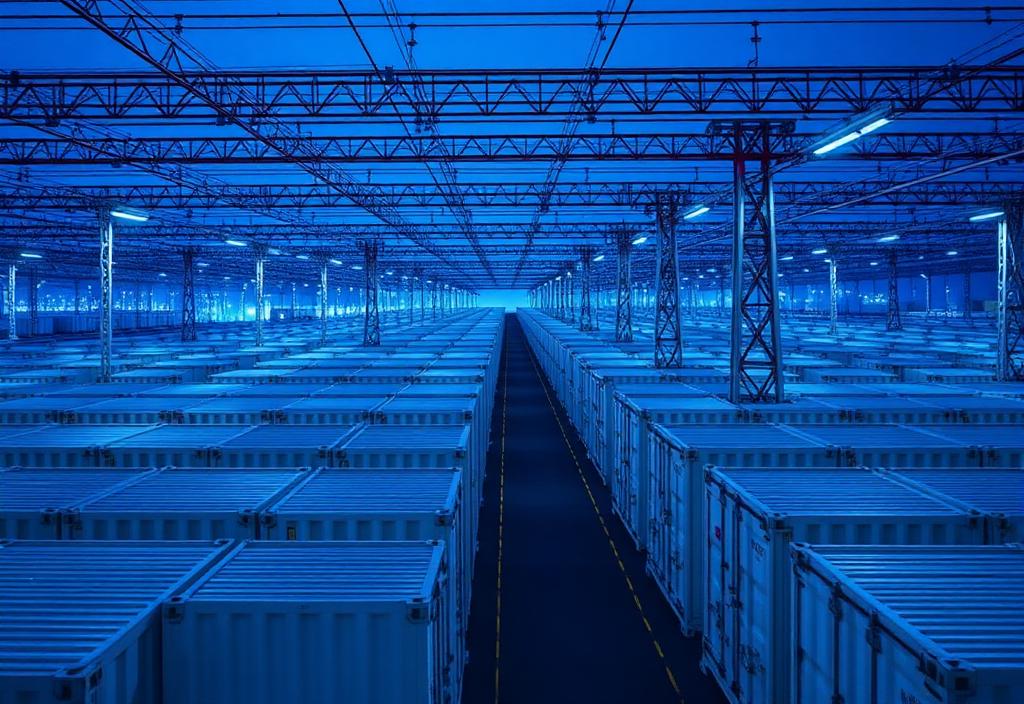
That asset is the battery. In roughly five years, energy storage has completed a transition most analysts did not expect this soon — from a specialized curiosity used for frequency regulation and behind-the-meter peak shaving to a load-bearing component of the bulk power system that grid operators plan around, capacity markets pay for, and utilities reach for first when they need reliable capacity in a hurry.
The economics of this transition are now well-established. Lithium iron phosphate battery systems, the chemistry that dominates the utility-scale storage market, have declined dramatically in cost since 2015. Four-hour battery systems are now deployed as peaker replacements in multiple U.S. markets, competing on cost and performance against natural gas peaking plants that have historically defined the marginal generation resource. In some markets, storage has become the default answer to a capacity need that a gas peaker would have filled a decade ago.
The field reality of utility-scale storage deployment has its own constraints. A 100-megawatt-hour BESS project is not simply a battery purchase. It involves site preparation, medium- or high-voltage interconnection, protection and control engineering, SCADA integration, fire detection and suppression systems, commissioning, and ongoing O&M requiring technicians who understand both battery management systems and power electronics. The construction timeline — typically 12 to 24 months from notice to proceed to commercial operation, depending on interconnection complexity — is fast relative to a gas plant but not relative to the demand it is meant to serve.
Storage is no longer a technology waiting for its moment. It is infrastructure — planned for, paid for through capacity markets, and relied upon to serve loads that would otherwise require peaking generation.
The role of storage in capacity markets represents the clearest evidence of this institutional transition. Capacity markets in PJM, ISO-NE, and NYISO — the mechanisms through which grid operators procure assured capacity to serve future peak loads — have been increasingly clearing battery storage resources that meet performance requirements for capacity obligations. The grid operator is, in effect, counting on batteries to be available and performing when needed to serve peak load — the same fundamental service gas turbines have provided for decades.
Behind-the-meter storage at data center campuses has taken on a different but equally consequential role. A large battery collocated with a hyperscale campus — sized at 400 megawatt-hours or more — simultaneously provides backup power, buffers against grid events that could interrupt compute workloads, optimizes the campus's grid draw against time-of-use prices, and where technically feasible, participates in ancillary services markets.
Yet storage, for all it can do, cannot move a single electron across the distance between a wind farm and a city. That job belongs to the oldest and slowest piece of the system — and the one where the gap between ambition and capacity is widest.
07 — The Transmission Problem
That job is transmission. If any single category captures the distance between what the transition demands and what the system can deliver, this is it. High-voltage transmission is the grid's circulatory system — the way power gets from where it is made to where it is used. It is also, by a wide margin, the slowest thing on the grid to plan, permit, and build.
Wires Built for a Different Map
The problem has several dimensions. The first is pure physical congestion. The U.S. transmission network was built largely in the mid-twentieth century, when the logic was regional self-sufficiency — each utility built generation close to its load and used transmission to manage modest regional exchanges. As renewable energy developed preferentially in high-resource areas — wind in the Great Plains, solar in the Southwest — that geographic pattern reversed. Large amounts of new generation are interconnecting in locations that lack the transmission capacity to deliver their output to load centers. The result is curtailment: generation that is available but cannot be delivered, because the wires that would carry it are already operating at or near their limits.
A Queue That Broke Under Its Own Weight
The interconnection queue has become a documented systemic failure. As of 2024, queues in major U.S. grid regions contained pending project requests totaling over a terawatt of generation capacity. The vast majority will never be built — the queue is filled with speculative applications and positions held without firm development intent. But the volume is so large that the study process itself has broken down. ISO and RTO study teams staffed to process a few hundred applications per year are now managing thousands.
FERC Order 2023 represented the most significant reform to the interconnection process in a generation — introducing cluster study processes, deposit requirements to flush speculative applications, and timelines intended to clear the backlog systematically. The reforms are real, but their effect on actual timelines will take years to become visible.
HVDC and the Long-Distance Problem
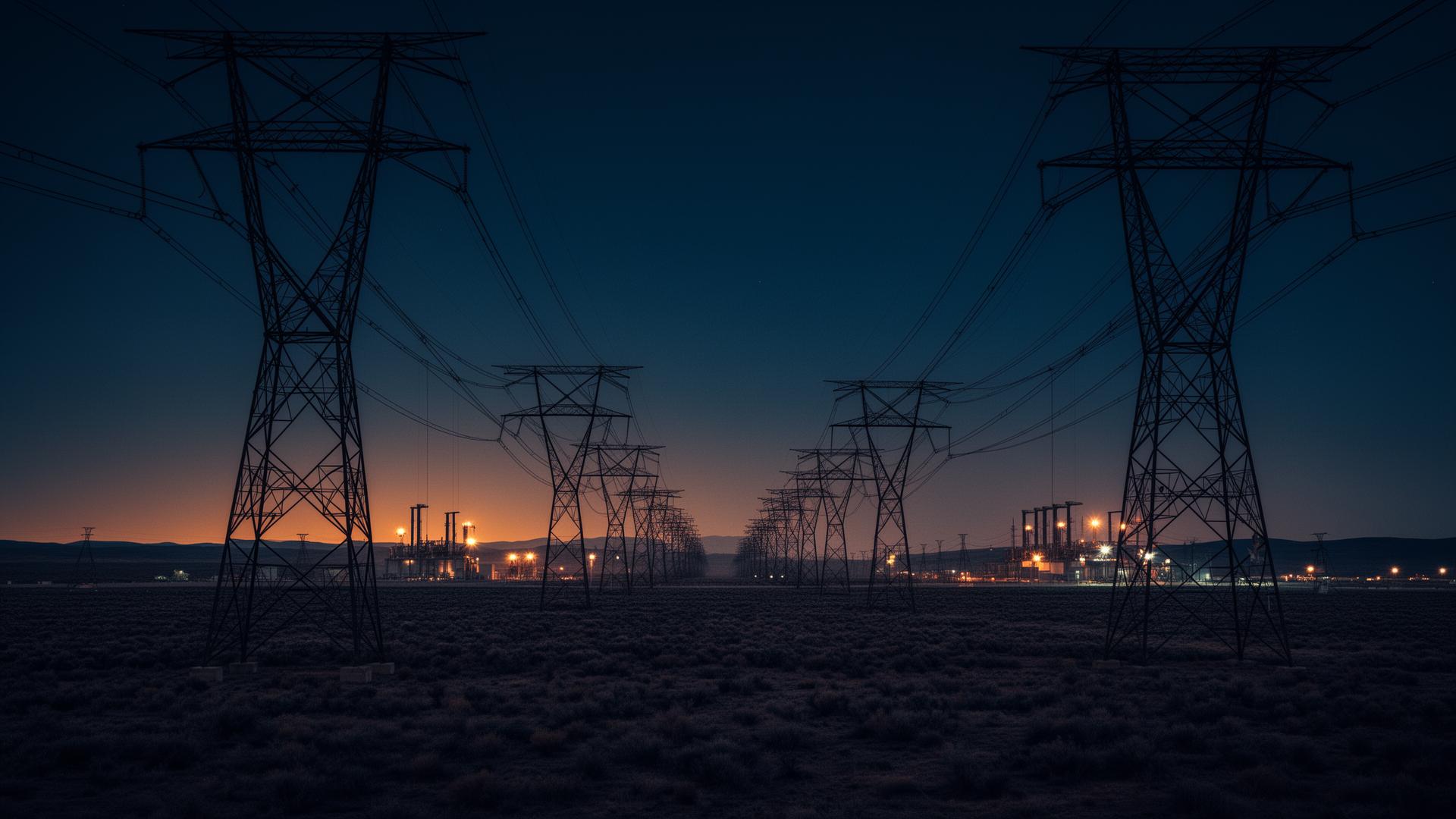
HVDC — high-voltage direct current transmission — is increasingly positioned as the technology to move large amounts of renewable energy over the long distances AC handles poorly. HVDC lines carry more power per tower than equivalent AC, can be buried underground or run subsea more economically, and can interconnect asynchronous grid regions. Several major HVDC projects are in active development — connecting Midwest wind to Mid-Atlantic load, Southwest solar to California and Nevada markets, offshore wind to coastal load centers. But these are multi-billion-dollar, decade-scale projects.
Transmission is the constraint that makes every other constraint harder. Without the wires, generation that exists cannot serve load that exists.
Generation and storage capacity pending interconnection study in major U.S. grid regions. Most will never reach commercial operation, but the volume has saturated study processes designed for an earlier era. Source: LBNL Berkeley Lab queue review.
08 — The Most Expensive Construction Environment in Decades
The buildout is usually measured by how much is being built. The harder truth, seen from inside the projects, is what it costs to build it. Utilities and developers are not simply doing more — they are doing it in the most expensive electrical construction environment in decades, with nearly every input rising at once and the lead times on critical equipment now as decisive a planning variable as the price of the equipment itself.
Start with the raw materials. The electrical grid is, at a physical level, an enormous quantity of copper and steel. Copper is the conductor of choice for most distribution wiring, transformer windings, and switchgear; aluminum substitutes in some transmission and large conductor applications but copper remains essential throughout the system. Copper prices have been volatile and have trended upward, driven in significant part by the same electrification and grid demand the buildout represents — a feedback loop in which the buildout's appetite for copper helps drive the price of the copper the buildout requires.
Equipment Lead Times as a Planning Variable
The transformer shortage has been the most visible equipment constraint, but it is not isolated. Large power transformers reached three-to-four-year lead times at the peak of the supply crunch; specialized voltage classes and configurations remain well above pre-2020 norms even after partial recovery. Medium-voltage switchgear that might have been procured in twelve weeks in 2019 has routinely run 40 to 60 weeks. Circuit breakers, protective relays, and even relatively standard distribution equipment have faced extended and unpredictable lead times. For an EPC managing a substation or transmission project, equipment procurement has shifted from a routine purchasing function to a strategic planning constraint.
This dynamic changes how projects are managed. A utility that historically designed a substation, then procured the equipment, now frequently must reserve manufacturing slots and place transformer orders before the design is fully complete, accepting the risk of design changes in order to hold a place in the manufacturing queue.
Civil Costs and Labor Escalation
The electrical equipment is only part of a project's cost. Civil construction — site preparation, grading, foundations, access roads, drainage, structures, and the general contracting that ties it together — represents a substantial fraction of total project cost, and it has faced the same cost pressures affecting construction broadly. The concrete, the aggregate, the heavy equipment, the diesel to run it, and the construction labor to execute it have all become more expensive.
Labor cost escalation deserves particular attention because it interacts with the workforce constraints discussed later. When skilled electrical construction labor is in short supply and high demand, its price rises — and the specialized crews capable of transmission line construction, substation commissioning, and high-voltage work command premiums that reflect their scarcity. A project that cannot secure crews at its budgeted labor rate either pays more or waits, and waiting carries its own cost in extended schedules and deferred revenue.
The cumulative effect is a buildout proceeding under cost conditions that would have looked prohibitive a decade ago — justified only because the demand driving it is real and the cost of not building is higher still.
09 — Utilities Enter a New Capital Cycle
The utility industry is entering a capital cycle that will define the sector for the next decade. The drivers reinforce one another: demand requiring new generation and transmission, distribution rebuilds driven by electrification, substation expansion demanded by both, and the digital upgrades a more complex system now requires. For a regulated utility, this is not an abstraction. Capital spending is the engine of the business — utilities earn an authorized return on the assets in their rate base, and a decade of heavy construction means the rate base is set to grow at a pace the industry has not seen in generations.
Investor-owned utilities once ran capital programs of fairly predictable size, growing their rate bases gradually through a steady cadence of distribution work, occasional generation, and periodic transmission additions. The numbers now appearing in capital plans filed with state regulators break sharply from that pattern. Several of the largest holding companies have disclosed five-year program increases of thirty to fifty percent over prior projections. Billion-dollar annual programs are becoming multi-billion-dollar ones. In aggregate, this may be the largest sustained construction cycle the industry has run since it built the nuclear fleet in the 1970s — and unlike that era, the spending is not concentrated in a few enormous plants but spread across thousands of projects.
The composition of that spending tells its own story. The capital is not flowing only to steel and copper. A growing share is going to the software layer of the grid — the systems that monitor, model, and increasingly control a network that is becoming too complex for the operating practices of the past. The grid is being rebuilt not only in physical capacity but in intelligence, and the line between an electric utility and a software-operated network is beginning, in places, to blur.
Distribution is the most pervasive category of spending and the least visible from outside the industry. Every vehicle that plugs in adds a little load to a local circuit; every heat pump shifts a winter's worth of heating onto the electric network. The sum of millions of small additions is thousands of discrete projects — transformer swaps, conductor upgrades, protection recalibration, meter renewal — scattered across every neighborhood.
And yet capital, however abundant, is not the same as a finished project. A utility can authorize every dollar in its plan and still find the work stalled — not for lack of money or technology, but for lack of a way through the thicket of studies, approvals, and procurement that stands between a sanctioned project and an energized one.
10 — The Interconnection Crisis
This is the quiet truth of American grid construction in the mid-2020s: the binding constraint is rarely the technology. The industry knows how to build a substation, string a transmission line, and interconnect a solar farm. The capital is available. The demand is documented. What slows everything down is coordination — the studies, approvals, upgrades, procurement, and scheduling that have to be sequenced across utilities, system operators, regulators, manufacturers, and contractors who do not share a calendar. The hard part is no longer knowing how to build. It is getting permission, in order, on time.
When the Study Process Stalls
The interconnection queue is where this shows up most plainly. When a developer wants to connect a solar farm, a battery, or a large load to the bulk power system, it files a request with the relevant system operator, which then studies the effect on the network — modeling power flows, identifying the upgrades required, checking whether protection schemes still hold. The method is sound. The volume has broken it.
The hard part is no longer knowing how to build. It is getting permission, in order, on time.
Procurement on the Critical Path
The transformer shortage runs on a separate track and makes the process problem worse. A project can clear its study and win its permits and still wait years for the transformer that anchors its connection. Switchgear, pad-mount units, and protective relays have all faced the same squeeze. Equipment that took twelve weeks to procure in 2019 routinely takes far longer now. Contractors front-load orders, hold gear in staging yards, and redesign around whatever is available.
Because in the end, none of it — not the study, not the permit, not the transformer on the flatbed — assembles itself. The buildout is carried out by people, and the people are running short.
11 — The Workforce Challenge
Every great construction effort eventually meets the same limit: the people who can do the work. This one is no exception, and its labor problem is sharper than most, because it demands specialized skill across many trades at once — and because two decades of flat demand let those pipelines thin, drift to other industries, or simply never grow toward a need that did not yet feel urgent.
The essential point is easy to state and hard to solve. A great many of these projects are limited not by money and not by technology, but by the availability of qualified people. The capital can be approved, the financing closed, the equipment on order — and the work still cannot move faster than the crews on site.
You can design the substation, finance the project, obtain the permits, and procure the transformer. None of it moves until you have the crews to build it — and the crews are already booked.
The utility workforce is aging, and the consequence is not only fewer hands but a draining of judgment. A large share of the field's experienced transmission and distribution engineers, substation technicians, relay and protection specialists, and construction supervisors are within a decade of retirement. What they carry out the door is not easily replaced: the feel for how a particular piece of equipment behaves, the memory of how a substation was actually built versus how the drawings say it was, the instinct to slow down when a job stops matching its design.
The Trades That Build the Grid
Utility lineworkers — the journeymen who build and maintain overhead and underground distribution and transmission — require four to five years of apprenticeship after recruitment. They are the crews executing the transformer replacements, the reconductoring, the service upgrades, and the storm restoration that the distribution buildout depends on. Demand for them is rising across distribution modernization, electrification-driven upgrades, and new construction simultaneously, and the apprenticeship pipeline has not expanded proportionally.
Journeyman electricians qualified for medium-voltage and substation work are distinct from general commercial electricians and cannot be substituted one for the other. The instrumentation and controls technicians who commission battery storage facilities, the splicers who terminate medium-voltage cable, the workers who can safely work around energized high-voltage equipment — each represents a specialized skill set with its own training pathway and its own shortage.
Relay and protection engineers — the professionals who design, program, and test the protection systems that keep transmission and distribution from cascading into each other during faults — are in particularly short supply relative to the substation construction and upgrade programs underway. High-voltage commissioning technicians, who test and energize new transmission and substation equipment before it enters service, are a similarly constrained specialty — and one that sits at the very end of the project schedule, where a shortage translates directly into delayed energization of completed infrastructure.
Apprenticeship programs, vocational partnerships, and community college electrical-technology tracks are drawing new attention and money from utilities, contractors, and labor unions that recognize the shortage as a structural limit, not a passing one. These efforts will work — but on the timescale of people, not projects. A lineworker who starts an apprenticeship today reaches journeyman status near the end of the decade, just as the buildout's demand for crews is expected to peak. This is the one constraint capital cannot buy its way past.
12 — What the Grid of 2040 Might Look Like
Look fifteen years out and the honest analysis lands on a sharp asymmetry between what can be known and what cannot. We do not know, with any real confidence, what will be generating the power in 2040. We know, with something close to certainty, that the grid carrying it — the wires, the substations, the distribution network, the control systems — will demand enormous investment no matter how the generation question resolves.
What We Don't Know About Generation
Consider how much remains genuinely uncertain about generation. Solar and wind have achieved cost positions that make them the lowest-cost new generation in most markets today, but their ultimate share depends on transmission buildout, storage economics, interconnection reform, and land availability — variables with wide ranges. Battery storage is scaling rapidly, but the pace at which it can displace firm thermal capacity depends on cost trajectories and the commercial maturity of longer-duration technologies that are not yet proven at scale. Small modular reactors are the subject of significant investment and attention, but their commercial deployment timelines and economics remain unproven.
None of these generation outcomes is inevitable. Anyone who claims to know precisely what the 2040 resource mix will be is overstating what can be known.
What We Do Know: The Wires
Whatever generates the power in 2040 — solar, wind, gas, nuclear, storage, or some mix no one has correctly predicted — it will connect to load through transmission lines, substations, and distribution infrastructure. A solar-dominated future requires enormous transmission buildout to move power from resource-rich areas to load. A nuclear-heavy future requires transmission and substation infrastructure to integrate large generation sources. A distributed future built on rooftop solar and behind-the-meter storage requires a fundamentally rebuilt and far more intelligent distribution system. Every plausible generation scenario converges on the same conclusion: the delivery system requires massive investment.
The 2040 grid is not a target or a forecast. It is the sum of thousands of specific decisions being made right now.
The most important thing to understand about the grid of 2040 is the simplest: it is being built now. The capital sanctioned in planning departments this year, the queue positions held this year, the substations breaking ground this year, the apprentices starting this year, the right-of-way acquired this year — these are the inputs. The 2040 grid is not a target or a forecast. It is the sum of thousands of specific decisions, each shaped by the constraints of a particular project, supply chain, labor market, and proceeding.
The grid is no longer a mature piece of infrastructure. It is a construction site.
One Story, Not Many
The energy transition is usually told as a collection of separate stories. The AI data center story. The electric vehicle story. The battery storage story. The transmission story. The utility capital story. Each gets its own coverage, its own analysts, its own conferences. Told separately, each sounds like an interesting development in a particular corner of the energy economy.
They are not separate stories. They are chapters of the same one.
The AI campus requesting 500 megawatts and the homeowner waiting weeks for a service upgrade are facing the same constraint from opposite ends — a grid that cannot expand as fast as the demand placed on it. The interconnection queue that strands a solar project and the transformer lead time that delays a substation are the same bottleneck wearing different clothes. The relay engineer a utility cannot hire and the lineworker an EPC cannot find are the same shortage seen from two job sites. Distribution feeders, substation transformer banks, HVDC corridors, battery containers, smart panels, and apprenticeship classrooms are not competing narratives. They are components of a single system being rebuilt simultaneously, while it stays in continuous operation, by an industry discovering the real limits of how fast that can be done.
The defining energy story of the next twenty years is not a single technology. It is not solar, or batteries, or AI, or electric vehicles, or any particular generation resource that may or may not win the competition to put power on the wires. The defining story is the rebuilding of the electric system itself — the physical infrastructure that every one of those technologies depends on and none of them can replace.
This is, at its core, a civil and electrical engineering project of a scale the country has not attempted in two generations. It runs on copper and steel, on transformers and switchgear, on permitting bandwidth and right-of-way, on the judgment of experienced engineers and the hands of skilled crews. The vision is electric. The execution is concrete, conduit, and labor.
This is the largest construction project of the generation, and it has no groundbreaking and no ribbon. It is being assembled out of millions of components and thousands of separate projects, in switchyards and manholes and rights-of-way that almost no one will ever see, by an industry rebuilding the system one transformer at a time — while that system stays energized beneath their hands, carrying the power the country is using right now, tonight, without pause. The grid was never finished. We only believed it was, because for twenty years it asked so little of us. Now it is asking for everything at once, and the answer is being welded, spliced, poured, and energized in real time — the quiet reconstruction of the single machine that everything else runs on.
The energy transition is no longer theoretical. It is being financed, engineered, interconnected, and built in real time.
Battery Storage Is Becoming Grid Infrastructure
Inside the Interconnection Queue Crisis
HVDC Corridors and the Stranded-Renewables Problem
The Electrification Era Is Just Beginning