
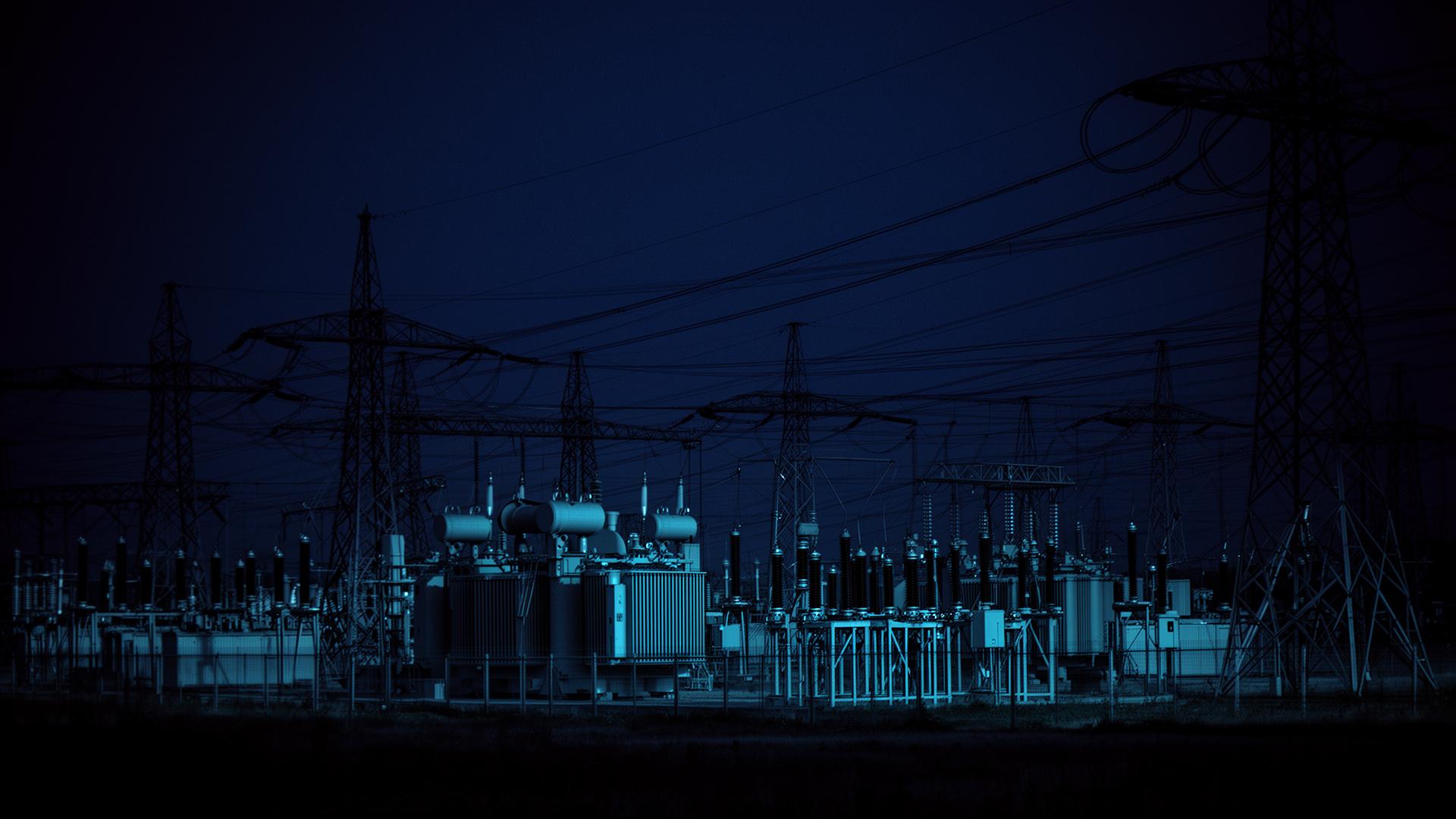
Inside the Interconnection Queue Crisis
2,600 GW is waiting to plug in. Hyperscale data centers are accelerating a transmission problem the grid was already failing to solve.
There are more than 2,600 gigawatts of proposed generation and storage capacity sitting in U.S. interconnection queues right now.
The entire installed U.S. generation fleet — every power plant, gas turbine, nuclear reactor, and wind farm currently producing electricity — totals roughly 1,200 gigawatts. The queue is more than twice that.
Projects are waiting three to five years for interconnection studies to complete. Many wait longer to receive a study result than it would take to physically construct the facility. And after years in the queue, the majority of projects withdraw before ever reaching commercial operation.
This is not primarily a permitting problem, though permitting is a factor. It is not primarily a regulatory problem, though regulation shapes the process. It is a physical infrastructure bottleneck — a mismatch between the volume of generation trying to connect to the grid and the transmission capacity available to absorb it.
The interconnection queue is where the gap between energy ambition and grid reality becomes measurable.
What the Interconnection Queue Actually Is
Every power plant that wants to sell electricity to the grid must first demonstrate it can connect without destabilizing the system. That process is called interconnection, and it is administered by independent system operators (ISOs) and regional transmission organizations (RTOs) — entities like PJM, MISO, CAISO, SPP, ERCOT, and ISO New England (ISO-NE) that manage transmission systems across multistate regions.
The process works, in simplified form, as follows: a developer submits an interconnection application, pays an application fee, and enters a queue. The ISO then conducts a series of engineering studies — system impact studies, facilities studies, and in some cases cluster or group studies — to determine whether and how the proposed project can connect to the grid.
These studies model the effects of adding new generation to the transmission system: how much current the lines will carry, whether substations will be overloaded, whether voltage stability will be maintained, and what physical upgrades to the grid are needed to accommodate the new plant. When the studies identify required upgrades, the costs of those upgrades are typically assigned, in whole or in part, to the project developer.
That cost allocation is often where projects die.
A developer might submit an application for a 200 MW solar project expecting interconnection costs of $10 to $20 million — a manageable number for a project of that scale. The study comes back eighteen months later assigning $150 million in required network upgrades. The project's economics collapse. The developer withdraws. The study slot they occupied — and the time it took to produce — is lost.
The queue is not simply a waiting list. It is a sequential study backlog, and each withdrawal disrupts the studies of every project behind it.
“The queue is not a waiting list. It is a sequential study backlog where every withdrawal disrupts the projects behind it.”
Why the Queue Exploded
The interconnection queue did not suddenly become congested. It has been growing for over a decade, but several forces converged to push it to its current scale.
The first was the collapse in utility-scale solar costs. As photovoltaic LCOE fell below $30 per megawatt-hour in many regions, the number of economically viable project sites expanded rapidly. Developers filed applications across every ISO region at volumes the study process was never designed to handle.
Battery storage followed a similar trajectory. Paired with solar, four-hour lithium iron phosphate systems became competitive in capacity markets and ancillary services. Storage project applications surged into the queue alongside generation.
The Inflation Reduction Act, passed in 2022, extended and expanded production tax credits and investment tax credits for clean energy, triggering another wave of project applications. Queue volumes in MISO and PJM increased by hundreds of gigawatts within months of the bill's passage.
U.S. interconnection queue volume
Active capacity in ISO/RTO queues, gigawatts. Acceleration after 2020 reflects solar, storage, and IRA-driven applications.
Underlying all of this is a structural architecture problem. The U.S. transmission system was designed around large, centralized generating stations — coal plants, nuclear facilities, and large gas plants built at relatively few locations with direct high-voltage transmission connections to population centers. The grid's topology reflects that history.
Utility-scale solar and wind are, by their physical nature, distributed resources. The best solar irradiance is in the desert Southwest. The best wind is in the Great Plains and offshore Atlantic. These locations are often far from the substations and transmission corridors where the existing grid has capacity available. Connecting distributed generation at scale requires not just a study — it requires physical transmission infrastructure that frequently does not exist.
Queue composition by resource
Share of queued capacity by technology. Solar and storage now dominate the application pipeline.
The Transmission Problem
This is the core of the issue.
When a project receives an interconnection study result with $200 million in assigned network upgrade costs, that number is not arbitrary bureaucratic overhead. It represents real infrastructure: new transmission lines, upgraded substation transformers, reactive power compensation equipment, and protection relay systems. These are physical assets with long procurement lead times and complex installation requirements.
Large power transformers — the equipment that steps transmission voltage up or down at substations — are among the most constrained components in the supply chain. Lead times from major manufacturers run 18 to 36 months under normal conditions. In a high-demand environment, quotes beyond three years are not uncommon. The U.S. manufactures a fraction of its transformer demand domestically. The bulk of supply comes from manufacturers in South Korea, Germany, and increasingly India.
Congestion compounds the problem. Transmission congestion occurs when more power is trying to flow through a corridor than its thermal or voltage limits allow. Congestion is not just a reliability concern — it has direct economic consequences. Grid operators resolve congestion by curtailing generation, paying high-cost generators to run to maintain stability, or both. Congestion costs in PJM alone have run into the billions of dollars annually.
Generation queue vs transmission additions
Annual U.S. capacity entering the queue compared with new high-voltage transmission added in service. The gap is the bottleneck.
HVDC transmission can alleviate these constraints over long distances with lower losses than AC systems, but HVDC projects are multi-decade undertakings. They require negotiating right-of-way across multiple states, coordinating between ISOs with different market structures, and capital investment of $3 to $5 million per mile. The regulatory framework for cost allocation on multi-state HVDC projects remains unsettled. Projects have been proposed, studied, and abandoned for decades.
The grid, in short, has the wrong topology for the generation mix being built.
“The grid has the wrong topology for the generation mix being built.”
AI Load Growth Changes Everything
Until recently, U.S. electricity demand was essentially flat. From roughly 2007 to 2022, total consumption was stable or declining year-over-year in most regions, driven by efficiency gains in lighting, appliances, and industrial processes. Utilities planned around zero to one percent annual load growth. Transmission investment was sized accordingly.
That assumption has been invalidated.
Hyperscale data centers — facilities of 500 megawatts to over 1 gigawatt of continuous power demand — are being developed at scale across Northern Virginia, Central Texas, Georgia, Arizona, and the Mountain West. These facilities operate around the clock at high load factors. They do not flex. They require firm, high-reliability power with redundancy. And they are being built faster than the grid was designed to absorb.
Hyperscale data center demand forecast
U.S. data center electricity demand, terawatt-hours per year. Multi-source projections converge on a step-change inflection.
PJM, which manages the transmission system serving roughly a quarter of the U.S. population, revised its long-range load forecast upward by more than 40 gigawatts over a two-year window — a planning revision with no precedent in recent utility history. MISO and ERCOT have issued similar revisions.
The interaction between rising load and the interconnection queue is what makes the current situation structurally different from earlier congestion episodes. When demand is flat, transmission constraints are primarily a generation-side problem. When demand is accelerating, those constraints apply simultaneously to new generation trying to connect and to load-serving utilities trying to meet new obligations.
Data centers are also generating a separate interconnection challenge. Some hyperscale developers, unable to secure utility power on the timelines their development schedules require, are pursuing co-location arrangements — placing data centers adjacent to existing generation facilities and connecting directly, bypassing the grid interconnection process. FERC issued Order 2003-A in 2024 to address the regulatory gaps this creates. The underlying impulse — to circumvent a queue that takes years — is a signal of how severe the constraint has become.
Why Most Projects Never Get Built
Fewer than 25 percent of projects entering U.S. interconnection queues historically reach commercial operation.
Some of this attrition is intentional. Developers submit applications for multiple sites knowing some will not pencil out — a rational hedging strategy when interconnection costs are unknown and study timelines are long. The historically low cost of entering a queue (often a few hundred thousand dollars in deposits for a multi-hundred-megawatt project) made speculative applications economically rational.
But the majority of withdrawals are not speculative exits. They reflect real project failures: interconnection cost allocations that exceed project financing capacity, study delays that push commercial operation dates past power purchase agreement windows, transmission upgrade schedules that cannot be synchronized with project construction, or supply chain delays that make queue positions expire.
The sequential nature of queue studies makes this worse. Each withdrawal requires the ISO to rerun studies for all projects behind the withdrawn project in the queue, because those studies modeled the grid with the withdrawn project connected. A wave of withdrawals — which is common when studies are delayed or upgrade costs are published — can set back the entire queue by months or years.
FERC Order 2023 and the Limits of Administrative Reform
In 2023, FERC issued Order 2023, the most significant reform to the interconnection process in two decades. The rule moved ISOs from sequential study processes to cluster-based studies — grouping projects by geography and studying them together, with shared cost allocation for shared network upgrades. It also imposed stricter readiness requirements for queue applicants, including higher deposits and milestones that projects must meet to maintain their position.
The intent was to reduce speculative queue entry, speed study timelines, and produce more accurate cost estimates for interconnection upgrades.
The reforms are substantively meaningful. Cluster studies reduce duplicated analytical work and provide clearer cost sharing. Withdrawal penalties reduce frivolous applications. Queue discipline, in theory, should improve.
What FERC Order 2023 cannot do is build transmission infrastructure.
Administrative reform can organize the queue more efficiently. It can reduce the volume of speculative applications. It can produce study results faster. But it cannot shorten transformer lead times, fund new HVDC corridors, resolve multistate siting disputes, or expand substation capacity. The physical infrastructure gap that drives interconnection costs and project failure rates exists independent of how the queue is organized.
“The bottleneck is not the study. The bottleneck is the grid.”
The Bigger Picture
The interconnection queue crisis is a symptom, not the disease.
The disease is the mismatch between the pace of energy system transformation — driven by technology economics, electrification, and demand growth — and the pace of physical grid investment. The U.S. transmission system was built incrementally over a century around an energy system that is now changing faster than transmission planning cycles can accommodate.
Utility capital expenditure programs are at multi-decade highs. Grid operators are revising long-range transmission plans. FERC has issued multiple rulemakings aimed at accelerating transmission development. States are experimenting with transmission authority reform. There is no shortage of planning activity.
But transmission planning to in-service timelines run ten to twenty years for major projects. Interconnection study backlogs run three to five years. Load growth from AI infrastructure is arriving now.
The emerging constraint is not generation technology. Solar panels, batteries, and gas turbines can all be manufactured and constructed within two to three years of a final investment decision. The constraint is grid throughput — the capacity of the physical transmission and distribution system to absorb new generation and serve new load.
Industrial reshoring — semiconductor fabrication, EV battery manufacturing, aluminum production — is placing additional continuous high-voltage load on regional grids that have not seen industrial demand growth in decades. Heat pumps and EV charging are adding distributed load with different temporal profiles than the residential and commercial demand the grid was sized for.
The interconnection queue is where all of these pressures become legible. It is the register where the gap between what the energy system wants to do and what the grid infrastructure can absorb is measured, one study result at a time.
Conclusion
The modern energy transition has largely solved its generation technology problem. Solar and wind are cheap. Batteries are scaling. The engineering to deploy them at utility scale is well understood. The supply chain, while stressed, is functional.
The problem is the grid.
2,600 gigawatts of generation and storage want to connect to a transmission system that was designed for a different era. The study process that determines whether and how they connect is overloaded. The physical infrastructure that would relieve the constraints — transmission lines, upgraded substations, new transformer capacity — takes years to plan and build, costs billions to finance, and requires navigating regulatory frameworks that have not kept pace with the speed of the transition.
AI data centers are accelerating the timeline. Industrial reshoring is adding demand the grid did not anticipate. EV adoption is changing load profiles in ways that stress distribution infrastructure. And the queue keeps growing.
The interconnection queue is not a bureaucratic nuisance. It is a physical throughput problem in the most consequential infrastructure system the modern economy runs on.
Solving it requires transmission investment at a scale and speed that the U.S. has not attempted since the construction of the interstate highway system.
The queue will tell you whether that effort is succeeding. Right now, it is not.
The bottleneck, in numbers.
More than 2× the installed U.S. generation fleet currently producing electricity.
Historical attrition rate for projects entering U.S. interconnection queues.
Many projects wait longer for a study result than it would take to physically construct the facility.
Two-year upward revision in long-range load forecasts driven by AI-scale demand.
More from the Feed.
The Earth Receives 173,000 Terawatts of Solar Energy
The bottleneck has never been the fuel. It's always been the infrastructure.
Battery Storage Is Becoming Grid Infrastructure
From peakers to firming: how 4-hour and 8-hour BESS are restructuring capacity markets.
HVDC Corridors and the Stranded-Renewables Problem
Wind in the plains, solar in the desert, load on the coasts. Why long-distance transmission is the bottleneck of the decade.